Author: suleyman

  • Clay Pot Buying Guide for Restaurants

    Clay Pot Buying Guide for Restaurants

    The clay pot (güveç) is one of the best-known cooking and serving vessels of Anatolian cuisine. For restaurants, eateries, hotels and catering companies with clay-pot dishes on their menu, choosing the right pot directly affects both how the kitchen runs and how the food is presented at the table. In this guide, as a family business working with clay products since 1920, we have gathered the points businesses should consider when choosing clay pots.

    1. Start with your menu

    Choosing clay pots should start with the menu, not the product catalogue. Decide which dishes will be cooked in a clay pot and which will only be served in one. Lidded clay pots are best for meat and pulse dishes that cook in the oven for a long time; karagüveç and tray pots suit portion dishes that go straight from the oven to the table; and clay pizza trays are best for pide and pizza.

    2. Choosing a model: lidded pot, karagüveç and tray pot

    Lidded clay pots and casserole pots

    Lidded clay pots keep the steam inside and are suited to slow-cooking meat, vegetable and pulse dishes. The Eskişehir clay casserole pot comes in small, medium, large and extra-large; the Eskişehir lidded clay pot in 25, 30 and 35 cm; and the Karacasu red lidded clay pot in small, medium and large.

    Karagüveç

    The Salihli karagüveç has a shallower, more open shape. It suits businesses serving single portions; the food arrives at the table in the dish it was cooked in and keeps its heat for a long time.

    Tray pots and ovenware

    The Eskişehir open tray pot comes in 25, 30, 35 and 40 cm, and the Eskişehir clay pizza tray in 30, 35 and 40 cm. They are popular for oven kebabs, chicken baked on clay, pide and sharing plates. You can find all options in our Clay Trays and Ovenware category.

    3. Choosing a size: portions and serving style

    To choose the right size, consider your portion size and serving style together:

    • Single portion: small clay pot and karagüveç, or a 25 cm tray pot
    • Sharing plate for two or three: medium and large sizes, or 30–35 cm models
    • Buffet, batch cooking and catering: extra-large casserole pots and 40 cm trays

    The size of every product is listed on our product pages. Before deciding, placing one portion on your current plate and measuring its volume makes it easier to choose the right size. If you are unsure about sizes, you can share your menu and portion sizes with us and ask for our advice.

    4. Take your oven capacity into account

    Because clay pots are cooked in the oven, the internal dimensions of your oven and the number of shelves determine how many pots you can cook at once. Choose the pot diameter by thinking about how many portions need to cook at the same time during busy hours. Sometimes choosing a pot one size smaller lets you fit more portions into the oven.

    5. Glazed or unglazed?

    The inner surface of glazed clay pots is covered with a glossy glaze; they are easier to clean and practical when dishwashing is intense. Unglazed products keep the natural look of clay and offer a traditional presentation. The glaze status of every product is stated in its name and on its page.

    6. Quantity planning

    When deciding how many pots you need, count not only your tables but also the pots that are in the oven, waiting to be washed and kept ready for service at the same time. Clay products are handmade and can wear over time with intensive use; we therefore recommend keeping a certain number of spare pots in stock. You can order different sizes of the same model together in one order.

    7. Brief your staff

    How long clay pots last depends largely on how they are handled in the kitchen. We recommend sharing these rules with your staff:

    • Clay pots should be oiled and cured in the oven before first use.
    • Clay pots should be used in the oven rather than over a direct flame.
    • A hot pot should not be put in cold water, on a wet surface or on a marble worktop.
    • Clay pots should be washed by hand.
    • Clay pots cannot be used in the microwave.

    For details, see our articles “How to Prepare a Clay Pot Before First Use” and “Can a Clay Pot Be Used on the Stove?“.

    Presenting clay-pot dishes

    A clay pot is not only a cooking vessel but also a serving piece. A dish arriving at the table in its own pot, still bubbling from the oven, leaves a strong impression on guests. That is why many restaurants list clay-pot dishes under a separate heading on the menu. Serving the pot on a wooden trivet completes the presentation and protects the table from the hot pot.

    Using the same size and model on every table creates a consistent look. Using pots from different regions for different dishes, on the other hand, adds variety to the menu; for example, you can reserve lidded pots for meat dishes and karagüveç for vegetable and single-portion dishes.

    Products that complement the clay pot

    Businesses serving clay-pot dishes can also benefit from other clay products in the same kitchen. Our catalogue includes yogurt pots for businesses serving homemade yogurt, rice pudding and soufflé bowls for the dessert menu, boat-shaped plates for meze and breakfast service, and sarma stones for restaurants cooking stuffed vine leaves and dolma. You can list different products together in a single quote request.

    Seasonal menus and clay pots

    Clay-pot dishes are often associated with winter menus; white beans, meat casseroles and türlü are more popular in the colder months. But clay pots can also find a place on summer menus. Light recipes such as olive-oil vegetable dishes, shrimp güveç and baked fish can be cooked and served in a clay pot. If you update your menu with the seasons, you can use the same set of pots all year round with different dishes.

    Seasonal businesses should determine their clay-pot needs and plan their order early, before the busy season begins. Since production and shipping times for handmade products can vary with the size of the order, we recommend agreeing on the delivery date together at the quotation stage.

    8. The wholesale ordering process

    The TerraVase website works as a wholesale catalogue; prices are shared by quotation because they depend on order quantity. To get a quote:

    1. Decide which products and sizes you need.
    2. Prepare the quantity for each product.
    3. State the delivery location.
    4. Send the details via our Wholesale Quote form, our WhatsApp line (+90 532 262 94 68) or info@terravasetoprakurunleri.com.

    Once we receive your request, we will share a quotation prepared for you.

    Frequently asked questions

    Can I order different models in one order?

    Yes. You can list different products such as clay pots, trays, bowls and yogurt pots together in the same quote request.

    Are all the products identical?

    Our products are handmade from natural clay. Each piece may therefore show small differences in colour, texture and size.

    Where can I find the sizes of the pots?

    The size of each product is given in the product name and on the product page. For models listed in centimetres, the size refers to the diameter of the pot.

    Where do you ship to?

    We ship from Turgutlu / Manisa across Turkey. For other destinations, please contact us. Delivery details are shared together with our quotation.

    Conclusion

    Choosing the right clay pot benefits both your kitchen and your guests when it is considered together with your menu, portion sizes, oven capacity and serving style. You can view all models in our Clay Pots and Casseroles category and contact us with any questions.
  • Can a Clay Pot Be Used on the Stove? Oven vs Stovetop

    Can a Clay Pot Be Used on the Stove? Oven vs Stovetop

    One of the most common questions from people who use clay pots is whether the pot can be used on the stove. Online you will find conflicting information: some sources say clay pots can also be used on the hob, while others recommend only the oven. In this article we explain why we at TerraVase recommend the oven and what you should pay attention to so that your clay pot lasts a long time.

    Short answer: use in the oven is recommended

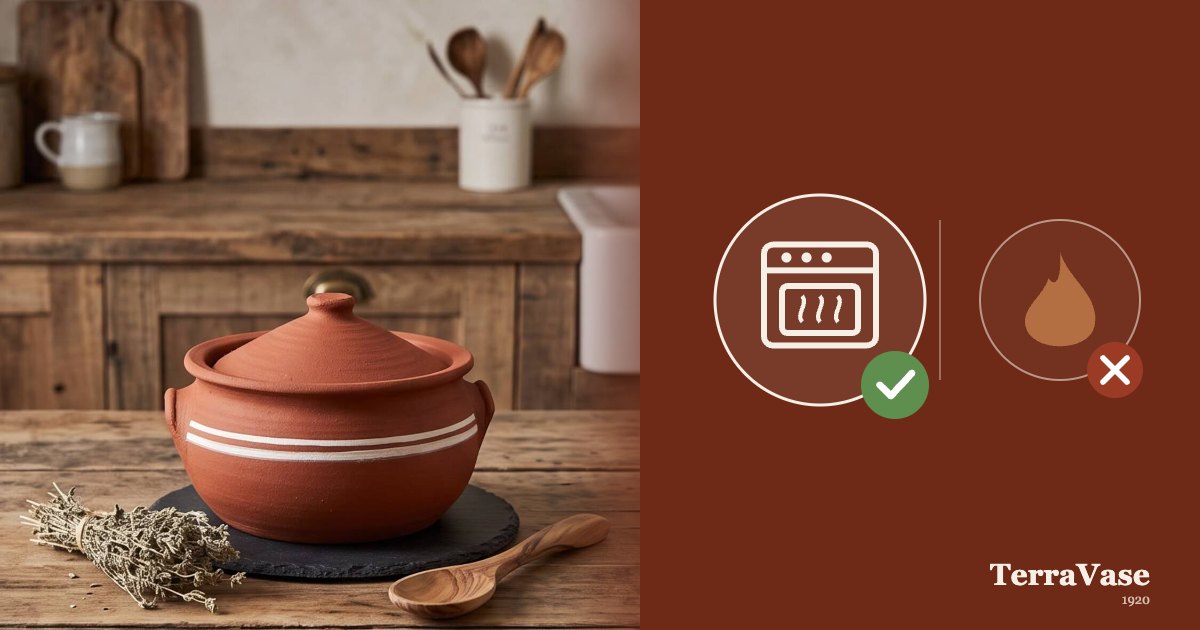
    Our recommendation for TerraVase clay pots, trays and yogurt pots is clear: It is recommended to use them in the oven rather than over a direct flame. This recommendation also appears in the “Use and care” section of our product pages. A clay pot is made to be used with the even heat of an oven that surrounds it from every side.

    Why the oven instead of the stove?

    Localised heating and sudden temperature differences

    On a stove, heat is concentrated only on the base of the pot, and often on just one part of the base. Clay conducts heat slowly. While the base heats up quickly, the sides and upper part of the pot stay cooler. Different parts of the same pot being at different temperatures creates stress in the material. Over time this stress can lead to hairline cracks or cause the pot to break.

    In the oven, heat surrounds the pot from every side. Because the pot warms up slowly and as a whole, no sudden temperature difference occurs.

    Glass-top and induction hobs

    Glass-top hobs have a flat cooking surface and transfer heat to the surface in direct contact. As the base of a clay pot is handmade, it may not be perfectly flat, which means only some points of the base heat up. Induction hobs work with a magnetic field and do not heat clay pots at all. For these reasons we do not recommend using clay pots on these types of hobs.

    Even heat distribution

    One of the qualities that makes a clay pot valuable is that it distributes heat slowly and evenly, allowing food to cook over a long time in its own juices. This quality shows best in the oven. It is also why traditional recipes such as lamb güveç, türlü (mixed vegetable stew), white beans or baked rice pudding are cooked in clay pots in the oven.

    Tips for using a clay pot in the oven

    • Start with a cold oven: Instead of putting the pot into a preheated oven, place it in a cold oven and heat them together.
    • Do not heat it empty: Do not heat the pot empty for a long time; put it in the oven together with the food you are cooking.
    • Add hot liquids: If you need to add liquid while cooking, use hot water instead of cold water.
    • Take care when removing it: Do not put a hot pot on a cold worktop, a wet surface or marble. Place a wooden trivet or a dry cloth underneath.
    • Cool it gradually: Do not wash a hot pot with cold water; let it cool down on its own first.
    • Do not use a microwave: Our clay pots cannot be used in the microwave.

    Recommendations by oven type

    Domestic electric oven

    In a home oven, place the pot on the middle shelf. The top and bottom shelves, which are very close to the heating elements, can make one side of the pot heat up faster than the other. Fan programmes distribute heat more evenly inside the oven and can be preferred for clay-pot cooking.

    Stone oven and wood-fired oven

    Traditional stone ovens are where clay-pot dishes have been cooked for many years. In these ovens the pot should be placed not right next to the flame but in the area where the heat is even. The area near the oven mouth is usually cooler; letting the pot wait there first and then moving it further in helps it warm up gradually.

    Commercial ovens

    The same rules apply to the convection and steam ovens used in restaurants: avoid sudden temperature changes, do not heat the pot empty and do not place a pot straight from the oven on cold surfaces. We cover model and size selection for businesses in our “Clay Pot Buying Guide for Restaurants“.

    Carrying the pot from the oven to the table

    A clay pot stays hot for a long time after leaving the oven. Use a dry oven glove when carrying it; a wet cloth transfers heat quickly. When serving, place a wooden trivet or a thick cloth under the pot. At the table, take care not to place the pot next to cold drinks and not to pour cold liquid onto it.

    Why does cooking in a clay pot take longer?

    A clay pot conducts heat slowly. That is why dishes cooked in a clay pot usually take longer than the same dish cooked in other pans. This is not a disadvantage but a feature that gives clay-pot dishes their character: meat and vegetables cook slowly in their own juices. For this reason, restaurants often plan clay-pot dishes in advance and put them in the oven early. When cooking at home, we also recommend putting the dish in the oven earlier rather than raising the oven temperature to shorten the cooking time. High heat can make the outer surface of the pot heat up much faster than the inside and create a sudden temperature difference.

    Storing your clay pot

    After use, once the pot is completely dry, store it in a dry, airy cupboard with the lid slightly open. When stacking pots, placing a cloth or paper between them prevents the rims from rubbing against each other. Before using a pot that has not been used for a long time, simply rinse it with lukewarm water and let it dry.

    First-use preparation matters too

    So that the pot can be used in the oven without problems, it is recommended to oil it and cure it in the oven before first use. We explain these steps in detail in our article “How to Prepare a Clay Pot Before First Use“.

    How can you tell if a clay pot is cracked?

    Cracks that start as a thin line on the surface of the pot can widen over time. If tapping the rim lightly with your finger produces a dull sound, or if liquid you put in the pot seeps out, the pot may be cracked. We do not recommend cooking in a cracked pot.

    Frequently asked questions

    Can I use a clay pot on the stove over a low flame?

    Our recommendation for our products is to use them in the oven rather than over a direct flame. Even a low flame creates localised heating on the base.

    Can a yogurt pot go in the oven?

    The product pages of our yogurt pots also recommend using them in the oven rather than over a direct flame, and oiling and oven-curing them before first use.

    Can a pot straight from the fridge go into the oven?

    Do not put a pot that has been in the fridge straight into a hot oven. Let it come to room temperature, or place it in a cold oven and heat them together.

    Can I use a clay pot on a barbecue or grill?

    Barbecues and grills apply direct, intense heat to the base of the pot. Our recommendation for our products is to use them in the oven rather than over a direct flame.

    What should I do if stains appear on the outside of the pot?

    Grease and food stains may appear on the outer surface during use. Once the pot has cooled, you can clean it with lukewarm water and a soft brush. Colour changes that develop over time are a natural result of using clay products.

    Do the same rules apply to clay trays and pizza trays?

    Yes. The same recommendations apply to our clay trays and ovenware: use in the oven rather than over a direct flame, wash by hand and do not use in the microwave.

    Which dishes are cooked in a clay pot?

    Meat and vegetable casseroles, pulse dishes such as white beans and chickpeas, türlü, shrimp güveç, baked rice pudding and baked pasta are among the dishes commonly cooked in clay pots.

    TerraVase clay pots

    You can find the traditional clay pot models of the Eskişehir, Salihli and Karacasu regions in different sizes in our Clay Pots and Casseroles category. You can send your wholesale supply request for your business through our Wholesale Quote page.

  • How to Prepare a Clay Pot Before First Use

    How to Prepare a Clay Pot Before First Use

    When you buy a new clay pot, you may want to start cooking with it right away. However, a handmade pot made of natural clay benefits from a short preparation before its first use so that it can serve you well for a long time. In this article, as a family business working with clay products since 1920, we explain how to prepare a clay pot step by step.

    Why is a clay pot prepared before first use?

    A clay pot is shaped by hand and then fired at a high temperature. Fired clay has a porous structure, and fine dust and clay residue from production may remain on the surface. The first preparation removes this residue, while oiling and oven-curing seal part of the pores and help the pot get used to cooking. In Turkey this is traditionally called “seasoning” or “taming” the pot.

    Our basic recommendation, which also appears on the product pages of TerraVase clay pots, is: It is recommended to oil the pot and cure it in the oven before first use.

    Step-by-step first-use preparation

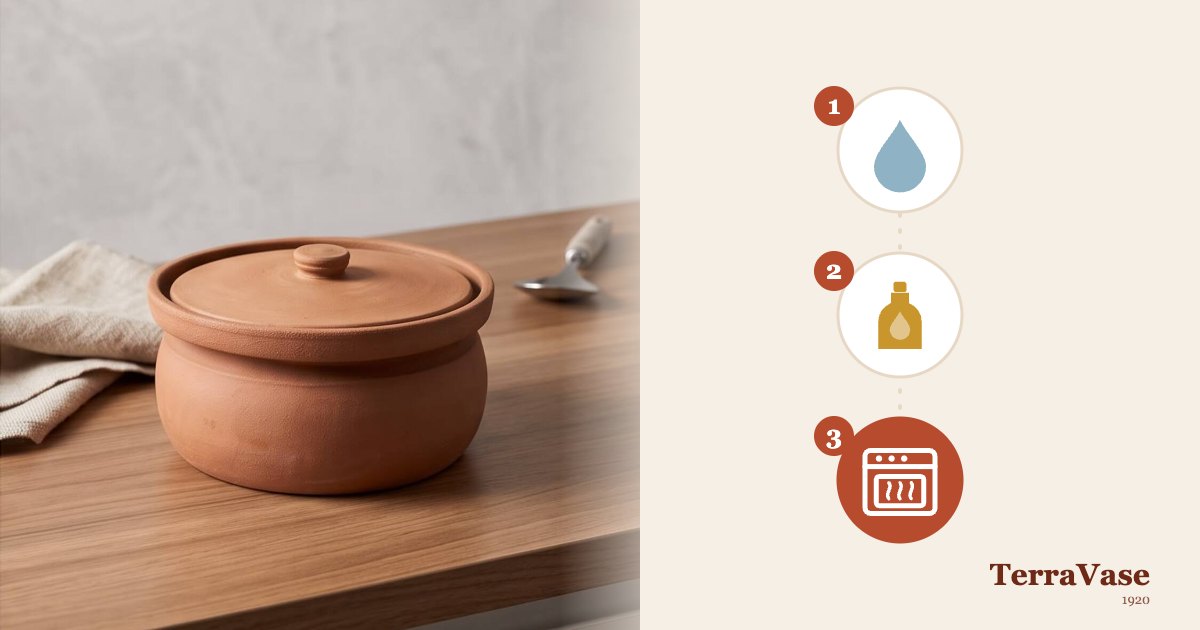
    1. Wash the pot with lukewarm water

    Wash the pot with lukewarm water using a soft sponge or brush. We recommend not using detergent at this stage; the porous surface can absorb detergent, which may then pass into your first meal as an odour. If the pot has a lid, wash the lid in the same way.

    2. Let it dry completely

    Turn the washed pot upside down and leave it to dry completely. Clay holds water for a while; even if the surface looks dry, the inside of the material may still be damp. Waiting patiently until the pot is fully dry is important for the oven step that follows.

    3. Oil the inside and outside

    Using a clean cloth or brush, apply a thin layer of cooking oil to the inner surface, the outer surface and the lid. It is enough for the oil to reach every point; do not leave pools of oil inside the pot. On glazed products the glaze already seals the surface, so oiling matters most on unglazed areas such as the outer surface and the rims.

    4. Place it in a cold oven and heat them together

    Place the oiled pot in a cold, unheated oven and start heating the oven with the pot inside. Clay pots are sensitive to sudden temperature changes. Heating the pot slowly together with the oven, instead of putting it into a hot oven, reduces the risk of cracking. Set the oven to a low-to-medium temperature and keep the pot in the oven for a while.

    5. Let it cool down in the oven

    When the time is up, switch off the oven but do not take the pot out immediately. Keep the oven door closed and let the pot cool slowly together with the oven. Placing a hot pot on a cold worktop, a wet surface or marble causes sudden cooling.

    Once you have completed these steps, your pot is ready for its first meal.

    The difference between glazed and unglazed clay pots

    Clay pots fall into two groups depending on how their inner surface is finished: glazed and unglazed. The inner surface of a glazed pot is covered with a thin layer that is applied before firing and turns glassy in the kiln. This layer makes the surface smooth and food residue easier to clean. In unglazed pots, the clay is left in its natural state. The porous surface absorbs some of the steam and fat from the food, so careful first-use preparation is even more important for unglazed pots.

    Which pot you choose depends on what you cook and on your cleaning habits. The glaze status of every product is stated in the product name and on the product page. The preparation steps are the same for both types.

    Dishes suited to the first cook

    For the first meals in a newly prepared pot, we recommend dishes with plenty of liquid and fat. Meat or vegetable casseroles, türlü (mixed vegetable stew) and pulse dishes such as white beans and chickpeas help the pot settle in, and they are also the recipes that best reflect the character of clay-pot cooking. Because these dishes contain a lot of liquid, the risk of sticking and burning on the base of the pot is low.

    It is a good habit to leave sugary and milk-based desserts, such as baked rice pudding, until after a few uses. Milk and sugar stick more easily at high temperatures; after several uses the surface of the pot becomes better suited to these recipes.

    Common first-use mistakes

    • Putting the pot directly on a flame: It is recommended to use clay pots in the oven rather than over a direct flame. We explain this in detail in our article “Can a Clay Pot Be Used on the Stove?“.
    • Washing with detergent: The porous surface can retain the smell of detergent.
    • Putting a wet pot in the oven: Moisture inside the material expands as it heats; cure the pot only after it is completely dry.
    • Putting a cold pot into a hot oven: A sudden change in temperature can cause cracking.
    • Using it in the microwave: TerraVase clay pots cannot be used in the microwave.

    What to watch out for during the first cook

    Adding enough liquid and fat to the pot for your first meal helps prevent food from sticking. If you need to add liquid while cooking, use hot water or hot stock instead of cold water. When serving a pot straight from the oven, place a wooden trivet or a dry cloth underneath it.

    The colour of the pot may darken slightly during the first few uses. Small differences in colour and texture are normal in handmade products made of natural clay and are a result of craftsmanship.

    Cleaning after use

    After using the pot, let it cool down, then wash it by hand with lukewarm water. If food residue has stuck, soak the pot in lukewarm water for a while and clean it with a soft brush. After washing, leave the pot to dry completely with the lid off; storing a damp pot in a cupboard with the lid closed can cause odours. As stated on our product pages, hand washing is recommended for clay pots.

    Frequently asked questions

    Do I need to oil the pot before every use?

    Oiling and oven-curing are done before the first use. For later uses, adding a suitable amount of oil to the dish you are cooking is usually enough.

    Which oil should I use?

    You can use the cooking oil you normally use at home. What matters is applying it in a thin, even layer.

    Do glazed pots need preparation too?

    Yes. Although the inner surface of glazed products is covered with glaze, the pot may have unglazed areas. We advise following the usage recommendations on the product page.

    Is an earthy smell in the pot normal?

    A slight earthy smell in a new clay pot is natural. After washing, oiling and oven-curing, the smell decreases considerably. With use, the pot develops its own character.

    Can I wash the pot in the dishwasher?

    Hand washing is recommended for our clay pots. Lukewarm water and a soft sponge or brush are usually enough.

    Can a cracked pot still be used?

    We do not recommend cooking in a cracked pot. A crack can widen as the pot heats up and cause it to break.

    TerraVase clay pot models

    Our catalogue includes the Eskişehir clay casserole pot in small, medium, large and extra-large sizes; the Eskişehir lidded clay pot in 25, 30 and 35 cm; and the Karacasu red lidded clay pot and Salihli karagüveç in small, medium and large sizes. You can view all models in our Clay Pots and Casseroles category.

    If you would like to source clay pots wholesale for your restaurant, hotel or shop, you can contact us through our Wholesale Quote page.