When you buy a new clay pot, you may want to start cooking with it right away. However, a handmade pot made of natural clay benefits from a short preparation before its first use so that it can serve you well for a long time. In this article, as a family business working with clay products since 1920, we explain how to prepare a clay pot step by step.
Why is a clay pot prepared before first use?
A clay pot is shaped by hand and then fired at a high temperature. Fired clay has a porous structure, and fine dust and clay residue from production may remain on the surface. The first preparation removes this residue, while oiling and oven-curing seal part of the pores and help the pot get used to cooking. In Turkey this is traditionally called “seasoning” or “taming” the pot.
Our basic recommendation, which also appears on the product pages of TerraVase clay pots, is: It is recommended to oil the pot and cure it in the oven before first use.
Step-by-step first-use preparation
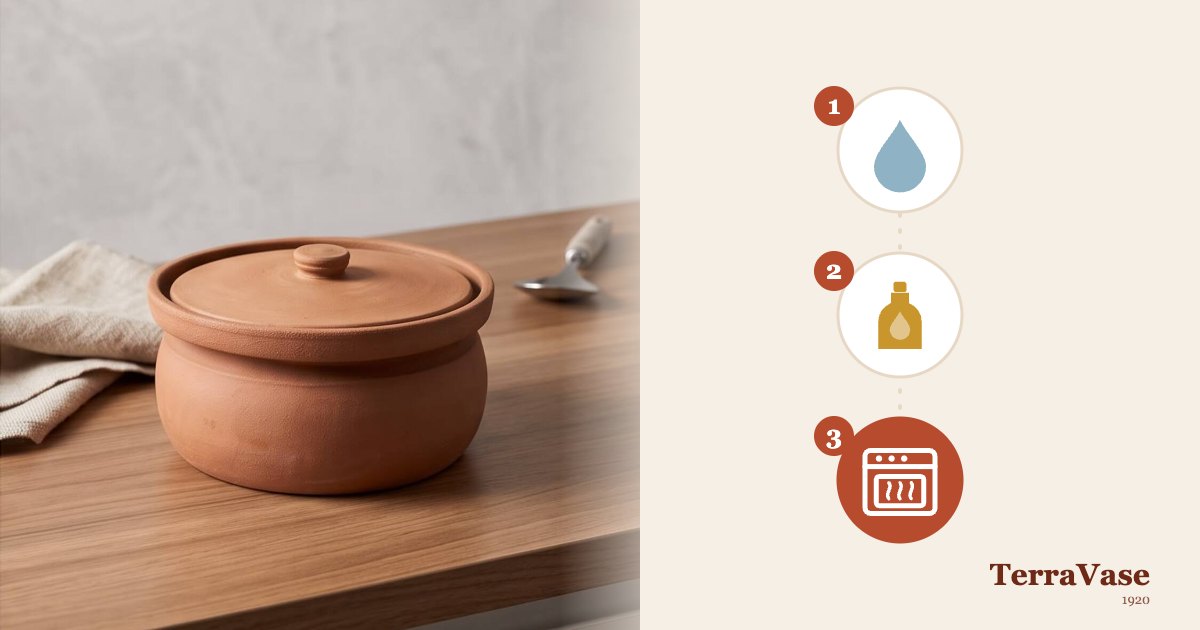
1. Wash the pot with lukewarm water
Wash the pot with lukewarm water using a soft sponge or brush. We recommend not using detergent at this stage; the porous surface can absorb detergent, which may then pass into your first meal as an odour. If the pot has a lid, wash the lid in the same way.
2. Let it dry completely
Turn the washed pot upside down and leave it to dry completely. Clay holds water for a while; even if the surface looks dry, the inside of the material may still be damp. Waiting patiently until the pot is fully dry is important for the oven step that follows.
3. Oil the inside and outside
Using a clean cloth or brush, apply a thin layer of cooking oil to the inner surface, the outer surface and the lid. It is enough for the oil to reach every point; do not leave pools of oil inside the pot. On glazed products the glaze already seals the surface, so oiling matters most on unglazed areas such as the outer surface and the rims.
4. Place it in a cold oven and heat them together
Place the oiled pot in a cold, unheated oven and start heating the oven with the pot inside. Clay pots are sensitive to sudden temperature changes. Heating the pot slowly together with the oven, instead of putting it into a hot oven, reduces the risk of cracking. Set the oven to a low-to-medium temperature and keep the pot in the oven for a while.
5. Let it cool down in the oven
When the time is up, switch off the oven but do not take the pot out immediately. Keep the oven door closed and let the pot cool slowly together with the oven. Placing a hot pot on a cold worktop, a wet surface or marble causes sudden cooling.
Once you have completed these steps, your pot is ready for its first meal.
The difference between glazed and unglazed clay pots
Clay pots fall into two groups depending on how their inner surface is finished: glazed and unglazed. The inner surface of a glazed pot is covered with a thin layer that is applied before firing and turns glassy in the kiln. This layer makes the surface smooth and food residue easier to clean. In unglazed pots, the clay is left in its natural state. The porous surface absorbs some of the steam and fat from the food, so careful first-use preparation is even more important for unglazed pots.
Which pot you choose depends on what you cook and on your cleaning habits. The glaze status of every product is stated in the product name and on the product page. The preparation steps are the same for both types.
Dishes suited to the first cook
For the first meals in a newly prepared pot, we recommend dishes with plenty of liquid and fat. Meat or vegetable casseroles, türlü (mixed vegetable stew) and pulse dishes such as white beans and chickpeas help the pot settle in, and they are also the recipes that best reflect the character of clay-pot cooking. Because these dishes contain a lot of liquid, the risk of sticking and burning on the base of the pot is low.
It is a good habit to leave sugary and milk-based desserts, such as baked rice pudding, until after a few uses. Milk and sugar stick more easily at high temperatures; after several uses the surface of the pot becomes better suited to these recipes.
Common first-use mistakes
- Putting the pot directly on a flame: It is recommended to use clay pots in the oven rather than over a direct flame. We explain this in detail in our article “Can a Clay Pot Be Used on the Stove?“.
- Washing with detergent: The porous surface can retain the smell of detergent.
- Putting a wet pot in the oven: Moisture inside the material expands as it heats; cure the pot only after it is completely dry.
- Putting a cold pot into a hot oven: A sudden change in temperature can cause cracking.
- Using it in the microwave: TerraVase clay pots cannot be used in the microwave.
What to watch out for during the first cook
Adding enough liquid and fat to the pot for your first meal helps prevent food from sticking. If you need to add liquid while cooking, use hot water or hot stock instead of cold water. When serving a pot straight from the oven, place a wooden trivet or a dry cloth underneath it.
The colour of the pot may darken slightly during the first few uses. Small differences in colour and texture are normal in handmade products made of natural clay and are a result of craftsmanship.
Cleaning after use
After using the pot, let it cool down, then wash it by hand with lukewarm water. If food residue has stuck, soak the pot in lukewarm water for a while and clean it with a soft brush. After washing, leave the pot to dry completely with the lid off; storing a damp pot in a cupboard with the lid closed can cause odours. As stated on our product pages, hand washing is recommended for clay pots.
Frequently asked questions
Do I need to oil the pot before every use?
Oiling and oven-curing are done before the first use. For later uses, adding a suitable amount of oil to the dish you are cooking is usually enough.
Which oil should I use?
You can use the cooking oil you normally use at home. What matters is applying it in a thin, even layer.
Do glazed pots need preparation too?
Yes. Although the inner surface of glazed products is covered with glaze, the pot may have unglazed areas. We advise following the usage recommendations on the product page.
Is an earthy smell in the pot normal?
A slight earthy smell in a new clay pot is natural. After washing, oiling and oven-curing, the smell decreases considerably. With use, the pot develops its own character.
Can I wash the pot in the dishwasher?
Hand washing is recommended for our clay pots. Lukewarm water and a soft sponge or brush are usually enough.
Can a cracked pot still be used?
We do not recommend cooking in a cracked pot. A crack can widen as the pot heats up and cause it to break.
TerraVase clay pot models
Our catalogue includes the Eskişehir clay casserole pot in small, medium, large and extra-large sizes; the Eskişehir lidded clay pot in 25, 30 and 35 cm; and the Karacasu red lidded clay pot and Salihli karagüveç in small, medium and large sizes. You can view all models in our Clay Pots and Casseroles category.
If you would like to source clay pots wholesale for your restaurant, hotel or shop, you can contact us through our Wholesale Quote page.